ABOUT

We are the ARCHUB Architects, a full-service design and consulting group specializing in environmental design architecture and research. Founded at Abu Dhabi University, ARCHHUB Architects is led by Mohamed Elkaftangui, Nadia Mounajjed, and Alessandra Misuri. It is committed to developing architectural designs towards a contemporary interpretation embodying an environmental and sustainable approach.
ARCHUB's projects encompass housing, public buildings, art, and interior design. Their projects are in the United Arab Emirates, but the team’s professional experience has been extended in Europe and Africa.
While practicing architecture, ARCHUB documents and discusses its reflections on architecture, culture, and arts through publications, architectural exhibitions, and academic lectures and presentations.

MISSION

The thoughtful, collaborative, and lasting creation of architecture can impact quality of life for those who use it. ARCHUB ARCHITECTS is devoted to crafting exclusive and responsive spaces that go beyond the standard building experience. We believe in our responsibility as designers to provide clients with projects that are sustainable and responsible.

PROCESS

A design process informed by research, encompassing every phase:
from planning to programming, as from concept to development.

Environmental assessment and building energy performance.

Optimized design process that leads to sustainable design.

ARCHUB
ARCHITECTURAL DESIGN

ARCHUB believes that the most important key to success in the design thinking process is to improve the use of creative thinking throughout the different phases of the project.
To keep improving the quality of our solutions, we focus on the end user and create a collaborative environment working on refining ideas. In our projects, we create solutions to combine aesthetics, costs, durability, and environmental responsibility.  

ARCHUB
ENVIRONMENTAL STUDIES

Architecture and its environment are interdependent on one another. The environment gives context to its architecture, architecture defines its environment.
In our projects, we provide important care to the thermal comfort of users by the creation of building systems that are adapted to the local environment and functions of the space. We control factors like insulation, solar gain, thermal inertia, and air ventilation.
By adopting an environmental design approach through our scientific engagements, ARCHUB ARCHITECTS possesses a unique advantage over traditional architecture firms when it comes to design and construction.
Most of our architectural projects are subjects of research and publications in conferences and journals. 

ARCHUB
BUSINESS INCUBATOR

ARCHUB gives junior architects and alumni access to mentorship, investors, and other support to help them to move beyond their embryonic phase.
ARCHUB provides support and coaching for new architectural projects businesses that have a promising idea, as well as for entrepreneurs still in the idea stage.
In addition to mentorship, our business incubators give young architects access to logistical and technical resources as well as shared office space.  

Hercules-390 Version — 4

In the landscape of enterprise computing, the mainframe remains a titan—synonymous with unrivaled reliability, scalability, and transactional throughput. For decades, the IBM Z platform has powered the world’s financial systems, airline reservations, and healthcare records. Yet, for students, hobbyists, and even legacy-reliant organizations, gaining access to this ecosystem has traditionally required prohibitively expensive hardware and licensing agreements. Enter Hercules-390, an open-source software emulator that democratized mainframe computing. Among its many iterations, Hercules-390 Version 4 stands as a landmark release: a mature, robust, and feature-complete bridge between the golden age of System/390 and the modern era of commodity hardware. The Architecture of Accessibility At its core, Hercules-390 Version 4 is a precision emulator capable of running unmodified IBM operating systems, including MVS, OS/390, VM/CMS, and even Linux for z/Architecture. What distinguishes Version 4 from its predecessors is a profound refinement of three critical areas: instruction accuracy , performance optimization , and cross-platform portability .

Today, while later versions (3.13, 4.1, 4.2) have added minor fixes, the architectural choices and performance innovations of Version 4 remain the gold standard. It turned the mainframe from an inaccessible relic into a virtual playground for learning, a lifeline for legacy migration, and a testament to the power of reverse engineering driven by passion rather than profit. Hercules-390 Version 4 is more than an emulator; it is a preservation engine and a pedagogical cornerstone . It proved that the formidable complexity of IBM’s ESA/390 instruction set could be mastered by a community of volunteers and that the result could run with reliability and speed rivaling original hardware. For the sysprog nostalgic for the green-on-black glow of a 3278 terminal, or the student curious about the backbone of global finance, Hercules-390 Version 4 remains the most faithful and accessible window into a computing tradition that still underpins the modern world. hercules-390 version 4

Performance saw a quantum leap through threaded interpretation and dynamic basic block chaining. While earlier versions relied on a simple instruction fetch-decode-execute loop, Version 4 implemented a just-in-time (JIT)-like translation mechanism for frequently executed code sequences. On a modern multi-core Intel or AMD processor, a Hercules-390 Version 4 instance could outperform a physical 1990s CMOS mainframe by a factor of ten to twenty, turning a $500 desktop into a virtual data center powerhouse. One of the most profound impacts of Hercules-390 Version 4 was its role as a digital preservation tool . Countless organizations had legacy data and applications trapped on aging System/390 hardware—machines with failing power supplies, magnetic tape drives, and proprietary disk packs. Version 4 provided a migration path: using tools like dasdload and tape2file , administrators could create exact disk and tape images from physical media and run them unaltered on the emulator. In the landscape of enterprise computing, the mainframe

Licensing also remains a nuanced issue. While Hercules itself is open source (QPL), the operating systems and middleware that run on it are proprietary IBM property. Version 4 cannot circumvent license keys or EULAs; it merely provides the canvas. Users must legally obtain IBM software—often through the Turnkey MVS distribution of public-domain OS releases or academic licenses. Released in the late 2000s and maintained through the early 2010s, Hercules-390 Version 4 represents a high-water mark of open source fidelity to a complex proprietary architecture. Its codebase influenced subsequent emulators in other domains (SIMH for DEC, QEMU for various architectures) and provided a reference implementation for ESA/390 that IBM itself has acknowledged as a valuable compatibility tool. What distinguishes Version 4 from its predecessors is

Furthermore, Version 4’s modular channel subsystem architecture emulated a wide array of control units: 3270 terminals, 3420 tape drives, 3490 cartridges, and 3380/3390 DASD. For the first time, a full Sysplex (with multiple emulated LPARs communicating over virtual CTC adapters) could be simulated on a single Linux server. System automation tools like NetView and OPS/MVS could be tested and trained upon without reserving a physical mainframe partition. No essay on Version 4 would be complete without acknowledging its constraints. The emulator, by design, focuses on the ESA/390 architecture, not the later z/Architecture (64-bit). Thus, it cannot run z/OS versions beyond 1.x that require 64-bit addressing. Additionally, while Version 4 emulates CPU and I/O faithfully, it does not emulate cryptographic coprocessors (CPACF, Crypto Express) at a functional level, limiting its use for fully secure, encrypted workloads.

Moreover, Version 4 introduced enhanced console support via the hercules HTTP server and integrated telnet line-mode terminals. This allowed a modern network of users to connect to a single emulated mainframe, each accessing a 3270 terminal session through a web browser or open-source tn3270 client. The democratization was staggering: a university computer science department could now teach JCL, COBOL, and CICS without a million-dollar IBM contract. Hercules-390 Version 4 also excelled as a development and testing platform. Its dynamic debugging features—such as the pr (probe) and diag commands—gave system programmers visibility into the internal state of the CPU, memory, and I/O channels at a level rarely available even on real hardware. This catalyzed a renaissance in hobbyist operating system development and revitalized interest in mainframe assembly language.

Version 4 achieved a near-flawless implementation of the ESA/390 architecture’s complex instruction set. Prior versions occasionally stumbled on edge-case instructions or esoteric privileged operations, causing crashes or unpredictable behavior in production-grade software. With Version 4, the development team closed those gaps, enabling the emulator to pass rigorous self-checking diagnostics such as the IBM internal CPU tests. For the first time, an open-source emulator could claim "cycle-true" behavior for the vast majority of standard workloads.
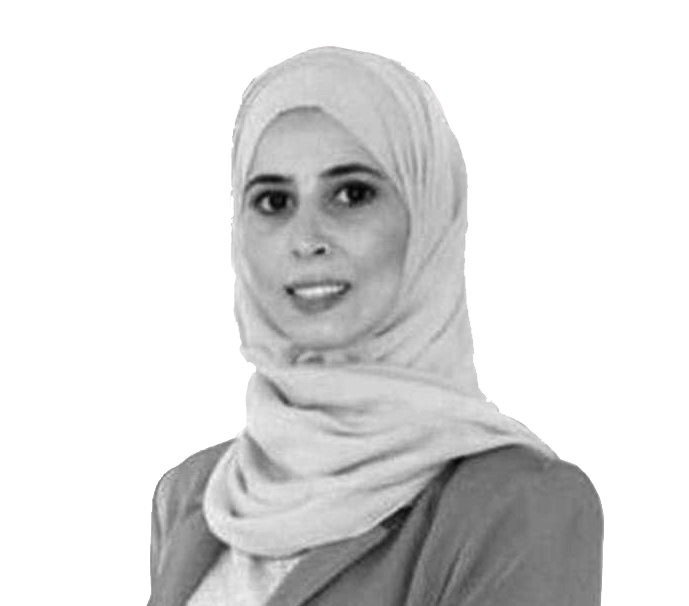
ALESSANDRA MISURI
ALESSANDRA MISURI
Principal Partner of ARCHUB
[email protected]

Arch. Alessandra Misuri is an Italian Architect with more than 20 years of experience in Architecture and Interior Design. Graduated from University of Florence, and License by Italian Professional Association of Architects O.A.P.P.C equivalent RIBA Part III as well as UAE license. Her working experience spans between Europe, UAE, and Africa for high-end Hospitality, Residential, Commercial and Retail projects. In UAE she has been appointed as Associate Architect and Design Manager by prestigious International Architecture and Design Firms. Awarded by UNESCO Award, her faculty experience at Abu Dhabi University focus on fostering talents for future challenges. Her expertise emphasis on creative solutions, with valued engineering awareness and competences joined with a solid materials and market knowledge. Her deep-rooted passion and constant research in new trends in Architectures and Design is a steady purpose in her professional and academic experience. Professionally she built strong customer confidence and trust, establishing a long-term alliance and relationship over several years.

AYA DIBAJEH
AYA DIBAJEH
Associate Partner of ARCHUB
[email protected]

Ms. Aya Dibaje is a Teaching Assistant of Architecture and Design with 8 years of experience, and providing exceptional administrative support. She received her master’s degree in sustainable architecture from Abu Dhabi University in 2018. Her research focuses on sustainability, building skins, and passive design strategies. She worked as a teaching assistant for several courses in Architecture, such as design courses, technical drawing, and software courses. In addition to her role in the Architecture department, she actively enhances the overall student experience by coordinating various student services, including academic advising, counseling, and engaging events. Her passion for design, coupled with hands-on experience in 3D printing and laser cutting, inspires and equips the next generation of architects and designers for success in the dynamic field.

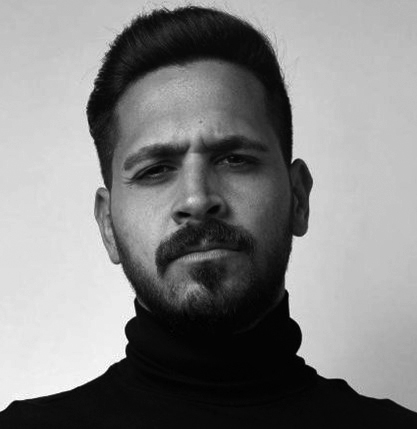
AHMED AL AWAWDA
AHMED AL AWAWDA
Associate Partner of ARCHUB
[email protected]

Mr. Ahmed Al Awawda is a Teaching & Model Making Lab Assistant of the Architecture and Design Department at Abu Dhabi University with more than 7 years of experience in the academic sector in teaching and providing exceptional administrative support. He received his master’s degree in sustainable architecture from Abu Dhabi University in 2018. His research focuses on passive design strategies. He worked as a teaching assistant for several courses in Architecture, such as design courses, technical drawing, and software courses. Ahmed plays a pivotal role in the Architecture department, where he oversees the technical facets of the department's facilities. He is particularly adept at managing and supervising the use of advanced machinery at the Architecture lab. Under his guidance, students gain hands-on experience, mastering the art of precision and innovation in architectural design. His commitment to bridging theoretical knowledge with practical skills makes Ahmed an invaluable asset to both faculty and aspiring architects within the department.

WhatsApp Text Message:
+971 503348467

Abu Dhabi:
+971 2 5015605 
+971 509946062

Al Ain:
+971 508431792

Abu Dhabi University Campus, Al Ain road, Zayed City
Al Ain Campus, Al Muwaij’ial – Al Sallan – Al Ain 

On appointment:
Monday to Thursday from 9:00am to 18:00pm

OUR LOCATION MAPS

Abu Dhabi

Al Ain

ARCHUB
ARCHUB

Follow Us!

hercules-390 version 4

AI Website Maker